
Overview of Offense Playbook PDFs
Offense playbook PDFs are digital guides detailing formations, routes, and strategies. They list position identification and personnel groupings. Youth spread playbooks focus on quarterback, running back, and receiver coordination, helping coaches streamline practice and game planning. Quick updates, team.

History and Evolution of Playbook PDFs
Early playbooks were handwritten ledgers, often bound in leather or paper, that coaches used to communicate formations and audibles. With the advent of typewriters in the mid‑20th century, teams began producing typed sheets, which were then photocopied for distribution. The 1980s and 1990s saw the introduction of desktop publishing software, allowing coaches to create more detailed diagrams and incorporate color. By the early 2000s, the widespread availability of affordable computers and the rise of the internet enabled teams to digitize playbooks, saving time and reducing errors. PDF became the standard format because it preserves layout across devices and platforms. Modern playbooks now include interactive features such as clickable diagrams, embedded videos, and cloud‑based collaboration tools, reflecting the shift toward data‑driven coaching and real‑time strategy adjustments. The evolution from paper to PDF mirrors broader technological trends in sports analytics and digital communication, making playbooks more accessible, shareable, and adaptable to diverse coaching needs. In recent years, teams have begun integrating data analytics directly into playbook PDFs, allowing coaches to adjust routes on the fly based on real‑time performance metrics. Additionally, cloud synchronization ensures that every player and assistant coach has the most current version, eliminating outdated playbooks that could compromise game strategy. Moreover, the use of color‑coded diagrams enhances quick recognition during high‑pressure plays. Color‑coded diagrams help players spot routes instantly during fast plays quickly!!

Common Formats and File Types
While PDF remains the dominant format for offensive playbooks, coaches and teams often employ a variety of file types to meet specific needs. The most frequently used formats include:
- PDF (Portable Document Format) – Offers consistent layout, easy printing, and compatibility across devices. PDFs can embed images, vector graphics, and hyperlinks, making them ideal for detailed diagrams and annotations.
- SVG (Scalable Vector Graphics) – Provides resolution‑independent diagrams that can be resized without loss of quality. SVG files are editable in vector editors and can be exported to PDF or PNG for distribution.
- PNG and JPEG – Common raster image formats used for quick sharing of play diagrams, especially on mobile devices or in social media contexts. PNG supports transparency, while JPEG offers smaller file sizes for dense color data.
- DOCX and ODT – Word‑processing documents that combine text explanations with embedded images. These formats allow coaches to add commentary, play notes, and version control within a familiar editing environment.
- PowerPoint (PPTX) – Enables slide‑based playbooks that can be projected during practice. Slides can include animations, timing cues, and interactive elements for real‑time coaching.
- Excel (XLSX) – Used for statistical analysis, player performance metrics, and play‑selection algorithms. Coaches can link spreadsheet data to PDF diagrams for a data‑driven approach;
- PDF‑X and PDF‑A – Specialized PDF subsets that ensure long‑term preservation (PDF‑A) or compliance with archival standards (PDF‑X). These are particularly useful for official league submissions and archival records.
Choosing the appropriate format depends on factors such as distribution method, device compatibility, editing requirements, and archival needs. Many coaching staffs maintain a hybrid library, using PDFs for official playbooks, SVGs for editable design work, and web‑based formats for live coaching sessions.
In addition, many programs support conversion between these formats. For example, vector drawings created in Adobe Illustrator or Inkscape can be exported directly to PDF or SVG, while text‑heavy playbooks drafted in Google Docs can be downloaded as PDF for consistency. Coaches also use password protection and digital signatures to secure sensitive playbooks, especially when sharing with external consultants or opposing staff. When archiving, teams often convert PDFs to PDF‑A to preserve the exact visual appearance for future reference. Finally, cloud platforms such as Google Drive, Dropbox, and Microsoft OneDrive allow real‑time collaboration, version history, and offline access, ensuring that every member of the coaching staff can stay up to date regardless of location.
Some advanced systems even embed QR codes within PDFs that link directly to video clips of the play in action, providing instant visual reinforcement for players.
Key Components of an Offense Playbook
Every offensive playbook PDF is built around core elements that translate strategy into actionable instructions. The first element is the Diagram Section, presenting formation, base alignment, and route trees. These vector‑based diagrams let coaches zoom on player positioning. Next is the Personnel Grouping Table, a concise matrix listing receivers, tight ends, and running backs for each play. This table is vital for quick play‑calling and ensures the offensive line and skill positions load correctly. These diagrams are shared with the coaching staff via secure cloud links for real‑time updates. All files are encrypted!!!!
The Play Description follows, giving a narrative of intent, timing, and key reads. Coaches include a “Read” column that specifies the quarterback’s decision tree, e.g., “If the defender covers the slot, run the inside zone.” The Route Tree details each receiver’s path from the line of scrimmage to the target zone. Route trees are annotated with timing markers (e.g., 2‑3‑4) to sync the offense’s rhythm.
Additional sections include Blocking Schemes for the offensive line, outlining pass protection and run blocking. Coaches embed Notes and Tips highlighting situational adjustments, e.g., “Use a quick slant on 3rd & 5th down to exploit the defender’s overcommitment.” Finally, the Legend explains symbols, colors, and abbreviations used, ensuring all team members interpret the playbook consistently.
Offense playbook PDFs are digital guides detailing formations, routes, and strategies. They list position identification and personnel groupings. Positions include quarterback, running back, and receiver coordination, helping coaches streamline practice and game planning. Quick updates, team.
Every offensive playbook PDF is built around core elements that translate strategy into actionable instructions. The first element is the Diagram Section, presenting formation, base alignment, and route trees. These vector‑based diagrams let coaches zoom on player positioning. Next is the Personnel Grouping Table, a concise matrix listing receivers, tight ends, and running backs for each play. This table is vital for quick play‑calling and ensures the offensive line and skill positions load correctly. These diagrams are shared with the coaching staff via secure cloud links for real‑time updates. All files are encrypted!!!!
The Play Description follows, giving a narrative of intent, timing, and key reads. Coaches include a “Read” column that specifies the quarterback’s decision tree, e.g., “If the defender covers the slot, run the inside zone.” The Route Tree details each receiver’s path from the line of scrimmage to the target zone. Route trees are annotated with timing markers (e.g., 2‑3‑4) to sync the offense’s rhythm.
Additional sections include Blocking Schemes for the offensive line, outlining pass protection and run blocking. Coaches embed Notes and Tips highlighting situational adjustments, e.g., “Use a quick slant on 3rd & 5th down to exploit the defender’s overcommitment.” Finally, the Legend explains symbols, colors, and abbreviations used, ensuring all team members interpret the playbook consistently.
Personnel Groupings and Position Identification
In an offense playbook PDF, the personnel grouping section is the backbone that translates a coach’s strategic vision into a playable roster configuration. Each play lists the exact number of receivers (R), tight ends (TE), and running backs (RB) that should line up, often expressed in a shorthand notation such as 4–2–5 or 3–3–1. This notation tells the offensive line how many backs will be in the backfield and how many receivers will be on the line, thereby influencing blocking assignments and route trees.
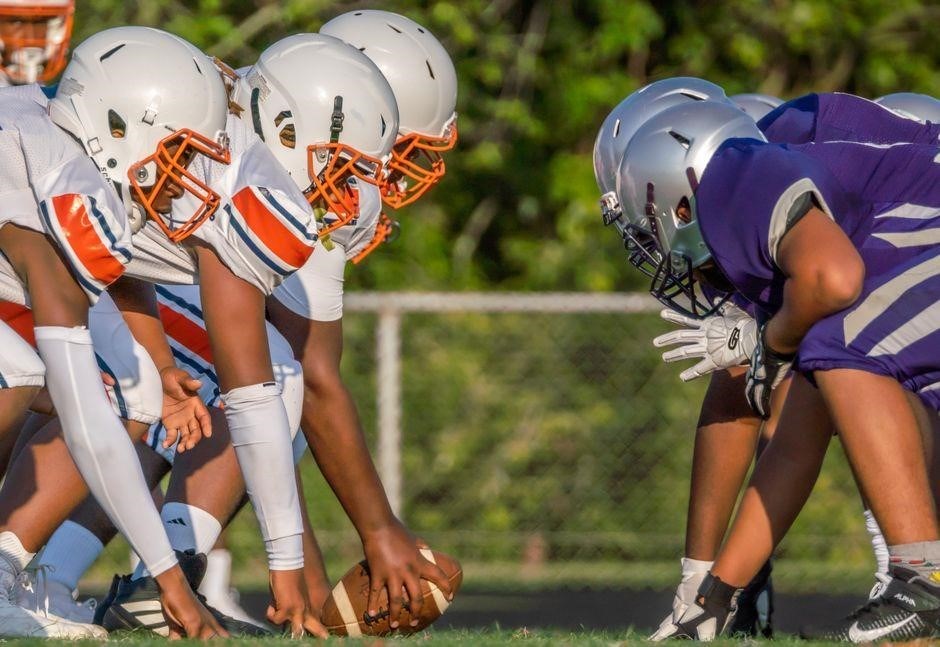
Position identification follows a standardized set of abbreviations: QB for the quarterback, RB for the running back, FB for the fullback, TE for the tight end, WR for the wide receiver, and OL for the offensive line. Each player’s role is further clarified by a “slot” designation (e.g., Slot WR, Outside WR) that indicates the player’s spot relative to the line of scrimmage. Coaches use these labels to ensure that every player knows where to line up, what routes to run, and how to read defensive alignments.
When designing a play, the coach specifies the grouping first, then assigns each position a unique identifier. For example, a “2–3–2” play might read: QB, RB, TE, WR1, WR2, WR3, RB2. The PDF automatically generates a visual diagram that places each player in the correct spot, complete with arrows showing route paths. By standardizing personnel groupings and position identifiers, the playbook guarantees consistency across practices, game day, and video reviews, allowing the team to execute complex schemes with precision!!
Play Categories: Passing, Running, Motion
In an offense playbook PDF, plays are grouped into three primary categories—passing, running, and motion—each serving distinct tactical purposes. Passing plays emphasize route trees, timing, and defensive reads, often subdivided into short, intermediate, and deep concepts. Running plays focus on line blocking, gap selection, and ball‑carrier vision, with variations such as zone, power, and option. Motion plays involve shifting players before the snap to create mismatches, disguise formations, or free up blockers.
Passing concepts are illustrated with detailed diagrams that show each receiver’s path, the quarterback’s drop, and the timing of the throw. The diagram uses color coding to differentiate routes: red for slants, blue for curls, green for posts. The quarterback’s drop is marked with a dashed line indicating the depth of the drop, while the timing of the throw is annotated with numbers that correspond to the receiver’s route tree. Running concepts include a “gap chart” that aligns offensive line assignments with defensive fronts, ensuring that each gap is assigned to a specific blocker. The chart also shows the ball‑carrier’s intended path, whether it is a zone read or a power run. Motion concepts are annotated with arrows indicating player movement, and notes on how the motion affects defensive alignment. For example, a left‑to‑right motion on the tight end forces the defensive tackle to shift, opening a hole for a quick handoff.
Coaches use the play‑category section to quickly filter plays during game planning. The PDF’s search function allows a coach to type “Pass” or “Run” and retrieve all relevant plays. This categorization also aids in practice drills, where teams can focus on one category at a time, ensuring mastery of fundamentals before integrating complex schemes. The clear separation of categories enhances communication among coaches, players, and support staff, leading to a smoother execution on game day. Additionally, the PDF includes a “Motion” tag that signals to the playbook reader that the play requires pre‑snap movement, allowing the offensive line to adjust blocking assignments accordingly.

Designing a Youth Spread Offense Playbook
Creating a youth spread offense playbook PDF begins with defining the team’s core philosophy—speed, space, and versatility. Coaches outline the key personnel groupings, typically a 2‑QB, 3‑WR set that allows for quick reads and multiple route combinations. The playbook’s layout prioritizes clarity: each play is numbered, accompanied by a concise diagram, a legend, and a brief description of the intended outcome.
Route trees are simplified for younger athletes; routes are color‑coded and labeled with short names (e.g., “SL‑20” for a 20‑yard slant). The diagram includes the quarterback’s drop, the defensive alignment, and the blocking assignments for the offensive line. Running plays emphasize zone blocking concepts, with gap charts that show the ball‑carrier’s path and the linemen’s responsibilities. Motion is introduced early, with arrows indicating player movement and notes on how the motion affects defensive coverage. Each diagram is printed on a single page with a clean, white background to reduce visual clutter. The playbook also includes a quick‑reference sheet that lists all abbreviations and a glossary for new players. Playbook includes quick legend for navigation
To keep the playbook user‑friendly, each section ends with a “Key Takeaway” bullet that summarizes the play’s purpose. Coaches can use the PDF’s search feature to locate plays by keyword (e.g., “Quick Pass” or “Zone Run”). The final step is to review the playbook with the team, ensuring that every player understands their role and the play’s objectives. A well‑structured youth spread playbook PDF not only streamlines practice but also builds confidence and teamwork on the field. During practice the team drills each play letting players adjust timing and spacing before live execution. The PDF also contains a glossary of key terms
Software Tools for Creating Playbooks
Coaches and designers rely on a variety of digital tools to craft professional‑looking offense playbook PDFs. The most common platforms include vector graphic editors such as Adobe Illustrator and CorelDRAW, which allow precise placement of player symbols, arrows, and spacing lines. For those preferring a more user‑friendly interface, Microsoft PowerPoint and Google Slides offer pre‑built play‑diagram templates that can be exported as PDFs with minimal effort.
Specialized play‑design software—Playbook, Coach’s Eye, and Hudl Playbook—provides built‑in libraries of player icons, route trees, and defensive formations. These tools often include drag‑and‑drop functionality, automatic legend generation, and the ability to layer motion arrows over static diagrams. Many of them support cloud storage, enabling real‑time collaboration among coaching staff.
When selecting a tool, consider file compatibility, export options, and the ability to annotate or add notes directly onto the diagram. Some programs allow the creation of interactive PDFs that let users click on a player symbol to view a brief play description. For teams on a tight budget, free alternatives like Inkscape or Canva can produce clean, printable playbooks, though they may lack advanced features such as motion animation or built‑in play‑library management.

Print a sample page to verify symbol alignment and legend clarity. Save the master file, then share the PDF via email or a shared drive so all coaches access the version. Keep it updated.!!
Downloading and Accessing Playbook PDFs

Downloading and accessing an offense playbook PDF starts with locating a trusted source—many teams host their playbooks on secure intranet portals or use open‑source repositories for generic templates. Once the link is verified, the file can be downloaded directly to a local drive or a cloud folder such as Google Drive, Dropbox, or OneDrive. The download process typically involves a simple click that triggers the browser’s default PDF viewer, allowing preview before saving. For offline access, store the PDF on a USB drive or a dedicated network share to ensure availability during travel or in venues with limited internet connectivity. Opening the PDF is straightforward: most operating systems include built‑in viewers, but for annotation, highlighting, or sticky notes, Adobe Acrobat Reader DC, Foxit Reader, or SumatraPDF are recommended. These tools support bookmarking, which is useful for navigating large playbooks. Password‑protected files require credentials; otherwise, they remain inaccessible. Sharing the playbook with assistants or players can be done via email attachments, but large files are better shared using a cloud link with view‑only or comment permissions. Cloud services also enable real‑time collaboration, allowing multiple users to annotate simultaneously. For a physical copy, the PDF can be printed on a high‑resolution printer; duplex printing saves paper and keeps the playbook compact. Backing up the playbook in a separate location—such as an external hard drive or secondary cloud account—prevents data loss. Regularly updating the PDF after each season’s adjustments ensures that all staff work from the most current version. By following these steps, coaches can reliably download, access, and distribute offense playbook PDFs across the organization. All steps are designed to streamline playbook management daily.!
Legal and Copyright Considerations
Legal and copyright considerations are paramount when compiling or distributing an offense playbook PDF. The playbook often contains proprietary schematics, route diagrams, and coaching notes that constitute intellectual property. Coaches and athletic departments must secure permission from the original designer or publisher before using a template or downloading a commercial playbook. Many universities provide internal licenses that allow staff to modify and share playbooks within the institution, but external distribution—such as sharing with opposing teams, media, or the public—generally requires explicit consent. The U.S. Copyright Act protects original works, and a playbook is considered a copyrighted work if it meets the threshold of originality. Even a simple diagram can be protected if it shows a unique arrangement of routes or blocking schemes. When creating a custom playbook, it is advisable to include a copyright notice, the year of creation, and the name of the rights holder. This notice informs users that the material is protected and discourages unauthorized copying. Additionally, the use of watermarks or digital signatures can deter illicit distribution. Coaches should also be mindful of the Fair Use doctrine, which permits limited use for criticism, commentary, or educational purposes, but the scope is narrow and often requires transformation or commentary. For broader distribution, obtaining a license or purchasing a commercial playbook is the safest route. Finally, when sharing PDFs electronically, encrypting the file or setting a password can add a layer of protection, though it is not a substitute for proper licensing. Ensuring compliance with copyright law protects the institution’s reputation and avoids costly legal disputes. All rights reserved. For inquiries, contact legal. No exceptions.!
Common PDF Features: Diagrams, Legends, Notes
Offense playbook PDFs routinely incorporate a set of core visual and textual elements that enable coaches to convey complex schemes efficiently. The most prominent feature is the diagram: a schematic drawing that shows the field, player positions, and movement paths. These diagrams are usually vector‑based, allowing for scaling without loss of clarity, and they often include multiple layers—one for the base formation, another for the play’s motion, and a third for blocking assignments. Legends accompany each diagram to decode symbols, color codes, and directional arrows. A concise legend table typically lists each player’s designation (QB, RB, WR, TE, OT, OG, C, DE, DT, LB, CB, S, etc.), the meaning of line colors (e.g., red for a run block, blue for a pass block), and any special notation such as “shallow” or “deep” routes. Notes sections provide narrative context: play intent, key reads, timing cues, and situational adjustments. Coaches often use bullet points or numbered lists to highlight critical moments, such as “first down on the 20‑yard line” or “adjust the tight end’s route if the defensive line is over‑committed.” Some playbooks also embed hyperlinks or QR codes that link to video demonstrations or supplemental PDFs, facilitating quick reference during practice. Finally, many PDFs include a “Version” stamp and a revision history table, ensuring that all users work from the most current play design. These combined features—diagrams, legends, and notes—create a cohesive, user‑friendly resource that supports both strategic planning and on‑field execution.!!!!!
Future Trends: Interactive PDFs and Mobile Apps
Modern offensive playbooks are evolving beyond static diagrams. Interactive PDFs embed clickable layers, allowing coaches to isolate routes, shift formations, or toggle blocking schemes on demand. Embedded multimedia—short clips, audio cues, or animated route paths—provides real‑time visual reinforcement. Mobile applications extend this interactivity by offering touch gestures to rotate, zoom, or annotate plays directly on the field layout. Many apps synchronize with cloud services, enabling instant updates across coaching staff, players, and support personnel. Advanced analytics modules can track practice usage, highlight frequently executed plays, and suggest adjustments based on opponent tendencies. Augmented reality overlays, still in early adoption, promise to project play diagrams onto a live field view, giving athletes spatial context during drills. As bandwidth improves, real‑time collaboration tools allow multiple users to edit a playbook simultaneously, ensuring consistency across all coaching levels. These innovations aim to reduce preparation time, enhance comprehension, and ultimately translate into sharper on‑field execution. Coaches can also export these interactive PDFs to PDF/A format for archival purposes, ensuring long‑term accessibility across different operating systems and devices. Future playbooks may incorporate AI‑generated play suggestions based on real‑time game data, allowing teams to adapt strategies instantly during contests. Teams share playbooks via links.!!